
No products in the cart.: ₹0.00

Ashok Stambh Location: History, Significance and Where It Is Found

Introduction
One of the most recognizable symbols of India’s ancient heritage is the Ashok Stambh. These pillars, installed during the reign of Emperor Ashoka of the Mauryan Empire, carried messages on Dhamma, morality, justice, and public welfare. People today search for the Ashok stambh location to find out where these monuments can be seen and why they are still of historical significance.
History of Ashok Stambh
The history of Ashok stambh started in the 3rd century BCE during the rule of Emperor Ashoka. After the Kalinga War, Ashoka preached compassion, tolerance, non-violence, and ethical conduct. Rocks and stone pillars throughout his empire bore his important messages carved on them.
The Ashoka pillar history shows that they were not just decorative monuments. They were meant to deliver royal commands and moral lessons to those who lived in far-off lands. Mauryan age was an age of developed art. A large number of the pillars were built of sandstone, cut with accuracy and polished to a fine surface.
Why did Ashoka erect these pillars?
Ashoka’s pillars had several important functions:
- To carry the principles of dhamma
- To communicate the royal instructions
- To promote compassion and tolerance
- To mark important Buddhist sites
- To advance good governance


Ashok Stambh Location: Where Is It Found?
There is not one Ashok stambh location, as Ashok erected pillars in many places of his empire. Important sites are Sarnath, Vaishali, Lauriya Nandangarh, Rampurva, Prayagraj, and Delhi.
The answer to where is Ashok stambh located depends on the particular pillar you want to explore. If you are looking for Ashok Stambh The various surviving pillars and capitals are valuable evidence of Ashoka’s reign and the extent of the Mauryan Empire. For those interested in heritage-inspired decor, you can also Explore Ashok Stambh Collection featuring designs influenced by India’s national heritage.
Major Ashoka Pillar Locations
Location | State/Region | Importance |
Sarnath | Uttar Pradesh | Famous for the Lion Capital |
Vaishali | Bihar | Known for an Ashokan pillar and lion capital |
Lauriya Nandangarh | Bihar | Important surviving inscribed pillar |
Rampurva | Bihar | Known for pillar remains and capitals |
Delhi | Delhi | Contains pillars moved there in later centuries |
The Pillar at Sarnath
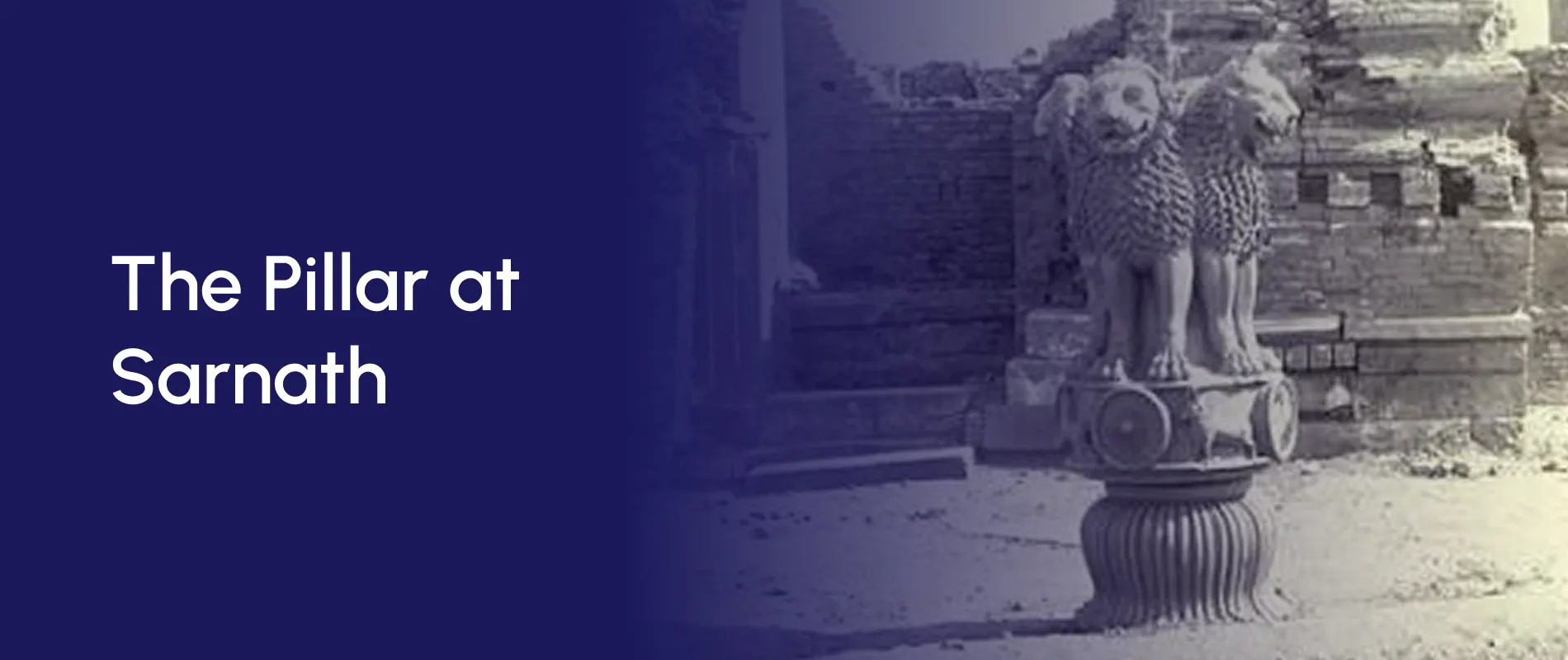
The Sarnath Ashoka pillar is one of the best-known monuments associated with Emperor Ashoka. Sarnath is famous as the place of the first sermon of Gautama Buddha after his enlightenment.
Later, the Lion Capital found at this Ashok stambh location site became the basis for India’s National Emblem. It is topped by four lions back to back over a circular abacus decorated with animal figures and wheels. The original Lion Capital is preserved in the Sarnath Archeological Museum.
Thus, the Sarnath Ashoka pillar is of both religious and national significance. It is an important specimen of Mauryan art and architecture.
Significance of Ashok Stambh
The history of Ashok stambh is significant, as such monuments represent a combination of governance, religion, communication, and art. Such monuments help understand more about the values propagated by Ashoka and also the practices that were prevalent during his rule.
Ashoka’s Pillars are significant due to the following reasons:
- They preserve ancient inscriptions
- They demonstrate Mauryan craftsmanship
- They reveal aspects of Ashoka’s administration
- They are connected with Buddhist heritage
- They provide evidence about ancient society
Each and every site of the Ashok stambh location provides a unique view of the Mauryan Empire and the efforts of Ashoka to propagate moral teachings.
Animals Shown on the Lion Capital
Many people have queried Ashok stambh how many animals depicted on the renowned Lion Capital of Sarnath. There are four lions facing each other back to back. Below them, there are four distinct animal symbols, namely, the elephant, horse, bull, and lion.
In answering any queries about the number of Ashok stambh how many animals, it is essential to distinguish between the four lions at the top and the four animal symbols on the abacus, which are separated by wheels. To complement patriotic office or desk decor, you can also explore Indian Desk Flags that reflect national pride in a simple and elegant way.
Architecture and Design
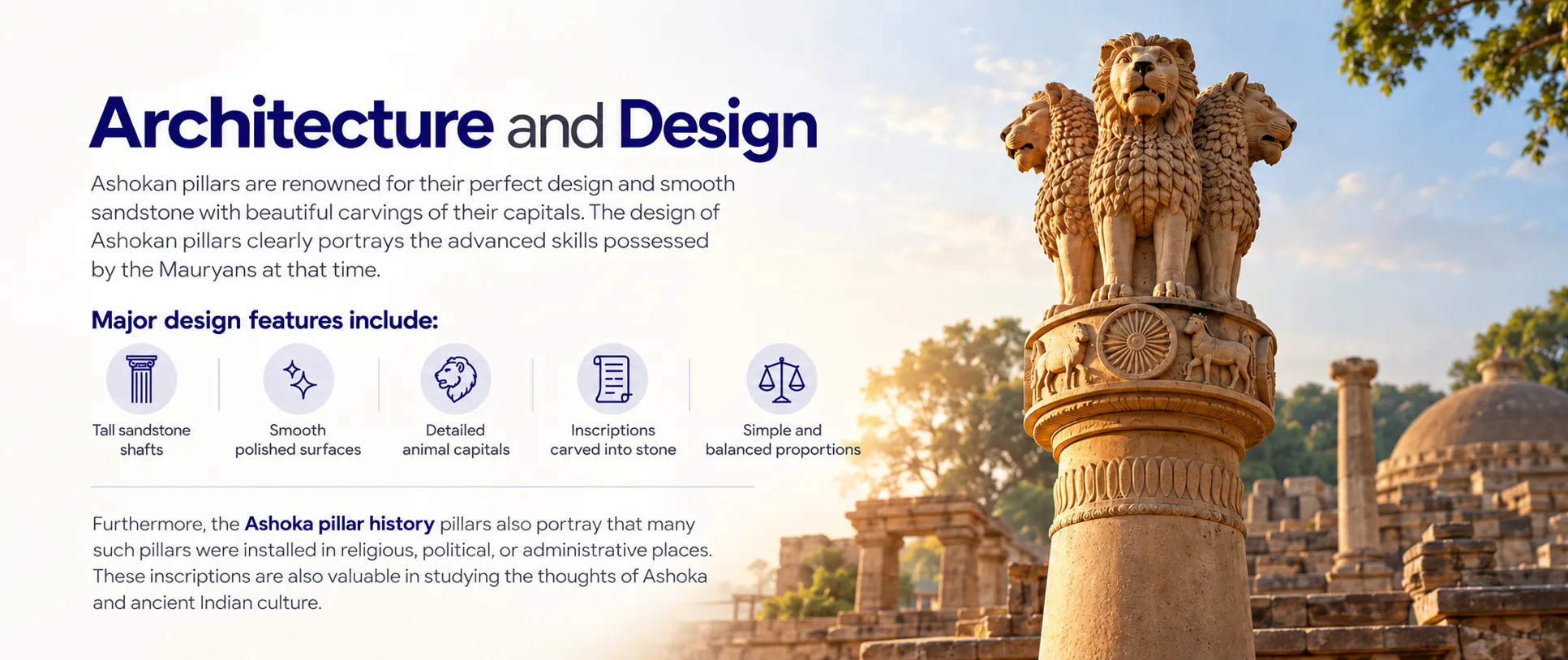
Ashokan pillars are renowned for their perfect design and smooth sandstone with beautiful carvings of their capitals. The design of Ashokan pillars clearly portrays the advanced skills possessed by the Mauryans at that time.
Major design features include:
- Tall sandstone shafts
- Smooth polished surfaces
- Detailed animal capitals
- Inscriptions carved into stone
- Simple and balanced proportions
Furthermore, the Ashoka pillar history pillars also portray that many such pillars were installed in religious, political, or administrative places. These inscriptions are also valuable in studying the thoughts of Ashoka and ancient Indian culture.
Where Can Ashoka Pillars Be Seen Today?
Those looking for the where is ashok stambh located would find the extant pillars and capitals in various archaeological sites and museums in India. While some of them are still standing in the open air, other monuments have been preserved inside the museums to prevent further damage.
The most important Ashok stambh location includes the one at Sarnath. The other important monuments are found in Bihar, Uttar Pradesh, and Delhi. This helps the researchers understand the contributions of Ashoka as an artist, king, and believer in religion.
Importance in Modern India
Monuments of Ashoka still affect modern Indian identity, as the emblem of India features the Lion Capital of Sarnath, and the center of the national flag features the symbol of the Dharma Chakra.
Hence, the preservation of every Ashok stambh location is significant not only from an archaeological point of view but also from the standpoint of preserving Indian national heritage. These monuments link modern-day India to concepts and art forms that emerged over two thousand years ago.
Moreover, the history of Ashok stambh gives insight into the way the rulers of India used to communicate with their subjects. It provides direct evidence of the history and complements the literary and archaeological evidence. You can also read more about how heritage symbols are adapted into useful decor through Ashoka Stambh Pen Stands.
Conclusion
The Ashok Stambh continues to be a vital representation of the reign of Emperor Ashoka and the accomplishments of the Mauryan Empire. Every single site of the Ashok stambh location clues regarding the past era, the history of governance, Buddhism, and art in India. This has helped maintain a connection between modern-day India and its past.
FAQs
Which is the most famous Ashok Stambh site?
One of the best-known places is Sarnath, located in Uttar Pradesh, where the discovery of the Lion Capital was used to design India’s National Emblem.
How many animals are represented on the famous capital?
The question Ashok stambh how many animals usually refers to four lions at the top and four animal figures on the abacus: elephant, horse, bull, and lion.
Why is the Sarnath pillar important?
The Sarnath Ashoka pillar is important for its connection with Emperor Ashoka, Buddhist heritage, and the Lion Capital that became the basis of India’s National Emblem.