No products in the cart.: ₹0.00

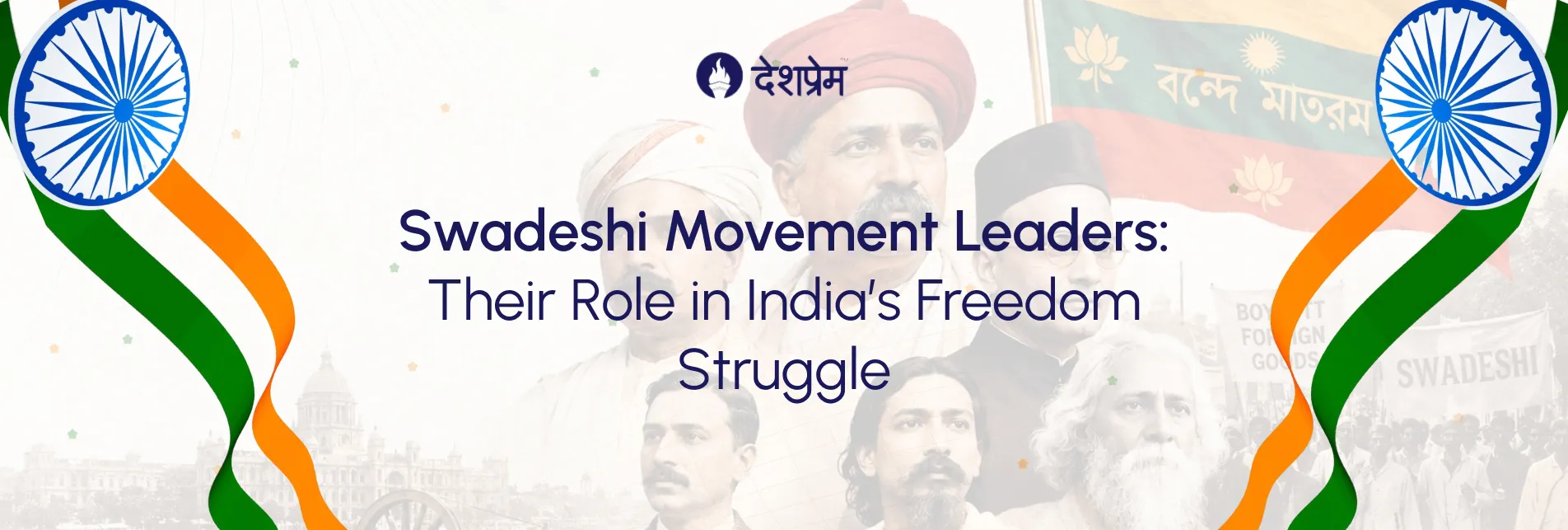
Swadeshi Movement Leaders: Their Role in India’s Freedom Struggle
Introduction
Strong movements that promoted independence, unity, and patriotism influenced India’s freedom struggle. One of the most significant campaigns against British colonial rule was the Swadeshi Movement. The swadeshi movement leaders encouraged Indians to support domestic businesses, boycott foreign products, and fortify their sense of national identity. Their work contributed to the independence movement’s transformation into a more widespread public movement founded on political consciousness and economic independence.
What Was the Swadeshi Movement?
Indians were urged by the Swadeshi Movement to substitute locally produced goods for British imports. It opposed colonial exploitation and encouraged economic independence.
Historical Background of the Swadeshi Movement 1905
After Lord Curzon declared the Partition of Bengal in 1905, the campaign gathered impetus. The decision was opposed by Indian nationalists, who saw it as an effort to erode political unity.
The movement gained momentum when a boycott resolution was approved at a significant public gathering in Calcutta on August 7, 1905.
The Swadeshi movement was started by whom?
One person did not start the movement. Indian nationalists, such as Surendranath Banerjee, Krishna Kumar Mitra, and other well-known political activists, worked together to establish it. The Swadeshi Movement’s message of self-reliance continues to encourage people to support Made in India products and strengthen local industries.
Famous Swadeshi Movement Leaders and Their Contributions
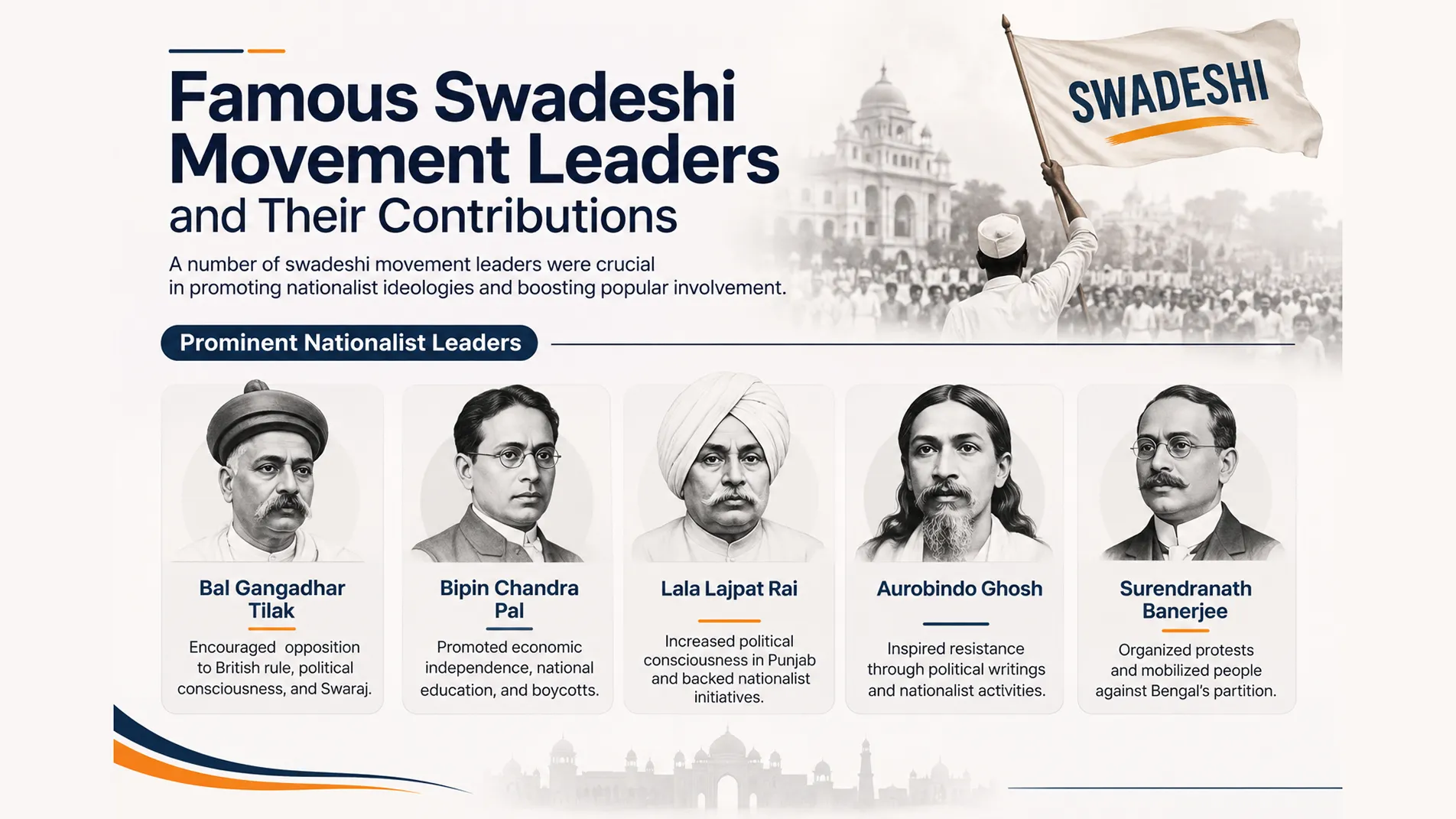
A number of swadeshi movement leaders were crucial in promoting nationalist ideologies and boosting popular involvement.
Prominent Nationalist Leaders
- Bal Gangadhar Tilak: Encouraged opposition to British rule, political consciousness, and Swaraj.
- Bipin Chandra Pal: Promoted economic independence, national education, and boycotts.
- Lala Lajpat Rai: Increased political consciousness in Punjab and backed nationalist initiatives.
- Aurobindo Ghosh: Inspired resistance through political writings and nationalist activities.
- Surendranath Banerjee: Organized protests and mobilized people against Bengal’s partition.
Rabindranath Tagore’s Cultural Contribution
Through patriotic songs, writings, and public events, Rabindranath Tagore bolstered the campaign. Communities opposing Bengal’s partition were united by his Raksha Bandhan programs.
How the leaders of the Swadeshi movement inspired Indians
Their publications, public campaigns, and speeches inspired regular people to take part in national affairs. They proved that group efforts might subvert colonial rule and spur political transformation.


Major Contributions of Swadeshi Movement Leaders
The swadeshi movement leaders encouraged Indians to become economically independent while strengthening resistance against British colonial policies.
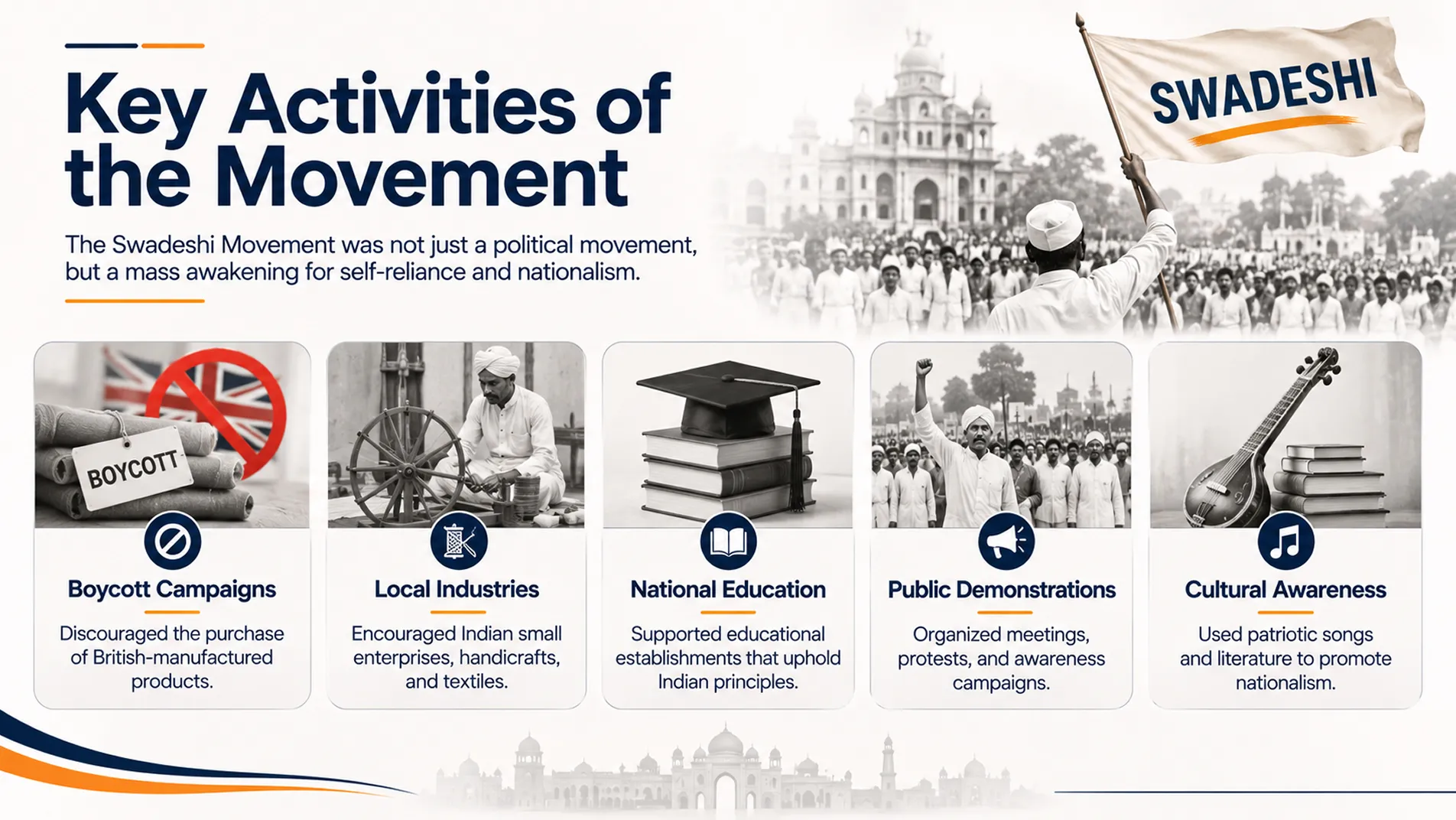
Key Activities of the Movement
- Boycott Campaigns: Discouraged the purchase of British-manufactured products.
- Local Industries: Encouraged Indian small enterprises, handicrafts, and textiles.
- National Education: Supported educational establishments that uphold Indian principles.
- Public Demonstrations: Organized meetings, protests, and awareness campaigns.
- Cultural Awareness: Used patriotic songs and literature to promote nationalism.
Importance of Economic Self-Reliance
Economic independence became an essential part of the freedom struggle. Supporting local manufacturers helped Indians recognize the importance of controlling their industries and reducing dependence on imported products.
The Swadeshi Movement Flag and Its Historical Significance
The swadeshi movement flag represented India’s developing national identity and growing resistance against British rule. Understanding the History of the Indian Flag helps highlight the importance of patriotic symbols in India’s freedom struggle.
History and Symbolism
One of the first flags created by nationalists was launched in Calcutta in August 1906. It consisted of three horizontal stripes of different colors, lotuses, and the slogan “Vande Mataram.”
Symbol of National Pride
This flag fostered cohesion among the Indians and helped promote patriotism. The creation of the flag showed their readiness to struggle for independence and preservation of their national identity. The patriotic values of the Swadeshi era remain relevant today, inspiring people to Celebrate the Spirit of India Through Meaningful Accessories that reflect India’s heritage and national identity.
Impact of the swadeshi movement 1905 on India's Independence
The movement strengthened Indian nationalism, encouraged indigenous industries, and introduced methods of political resistance that influenced later independence campaigns.
Major Historical Impacts
Area | Contribution to Freedom Struggle |
Nationalism | Strengthened patriotic awareness and unity |
Economy | Encouraged Indian industries and local products |
Education | Promoted national educational institutions |
Politics | Increased public participation in protests |
Independence | Influenced future boycott and mass movements |
Influence on Future Freedom Movements
Economic boycott and people’s involvement were made effective by the swadeshi movement leaders. Their tactics played a major role in setting up ideologies that were adopted in the Non-Cooperation Movement and other movements.
Legacy of the leaders of swadeshi movement
Their contributions connected economic freedom with political independence. The movement encouraged Indians to recognize their collective strength and contributed to the development of organized nationalist resistance.
Relevance of Swadeshi Movement Leaders in Modern India
The principles advocated by the swadeshi movement leaders are still applicable in today’s India. Encouraging manufacturing, craftsmanship, and entrepreneurship within the country is an embodiment of the movement’s philosophy of self-reliance.
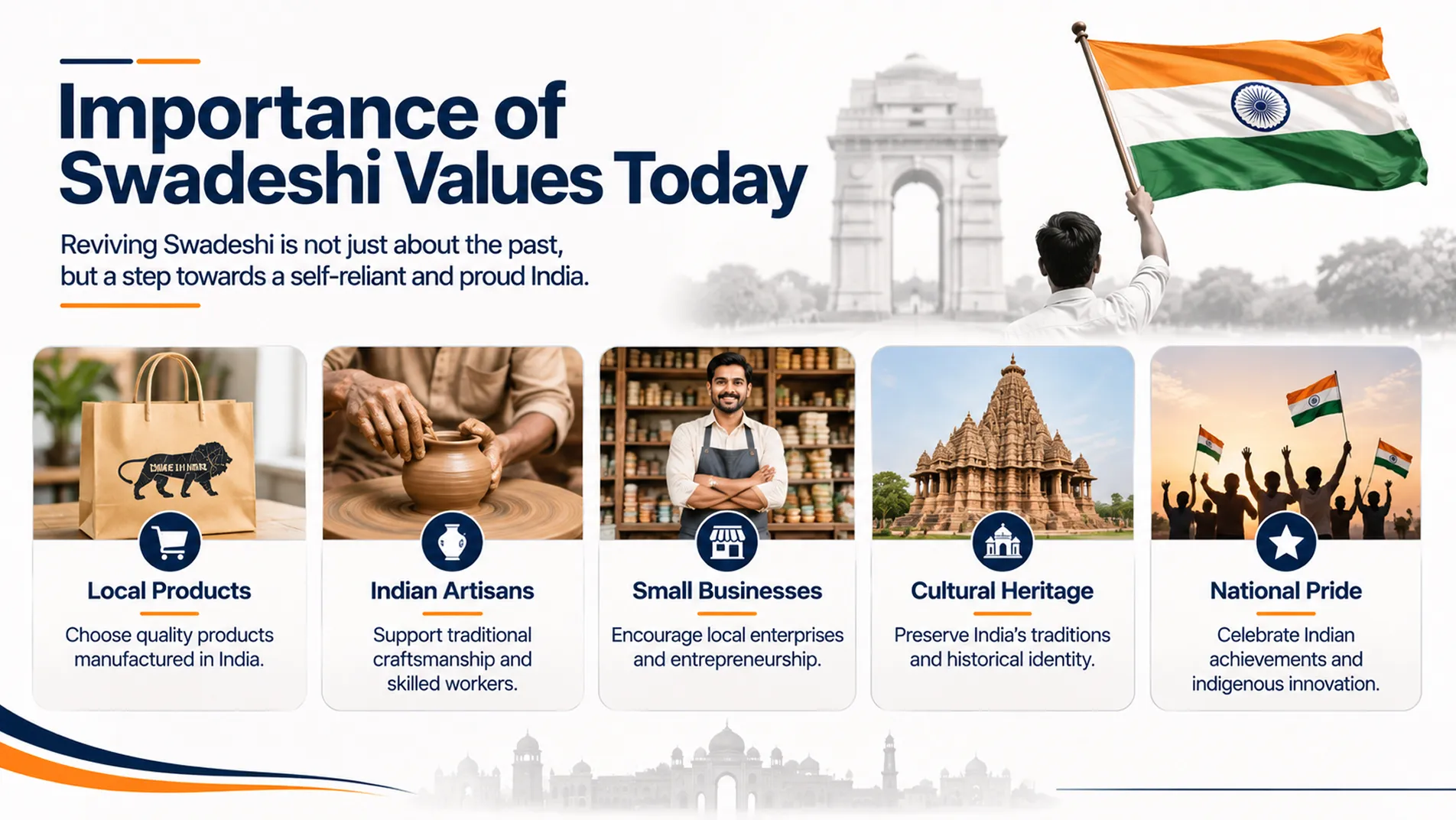
Importance of Swadeshi Values Today
- Local Products: Choose quality products manufactured in India.
- Indian Artisans: Support traditional craftsmanship and skilled workers.
- Small Businesses: Encourage local enterprises and entrepreneurship.
- Cultural Heritage: Preserve India’s traditions and historical identity.
- National Pride: Celebrate Indian achievements and indigenous innovation.
Connection with Make in India
Modern initiatives such as Make in India and Vocal for Local share the broader objective of strengthening domestic production. Although their economic context differs from colonial India, they reflect the continuing importance of indigenous enterprise. Brands like Deshprem help promote Indian heritage, patriotism, and national pride while keeping the spirit of Swadeshi alive.
Conclusion
The swadeshi movement leaders played an important role in India’s struggle for freedom through unity, nationalism, and economic independence. Their agitation helped to mobilize the people of India for local manufacturing and against foreign domination. The swadeshi movement enhanced nationalism and had an effect on the later freedom movement of India.
FAQs
Who were the most influential swadeshi movement leaders?
The main personalities related to the movement were Bal Gangadhar Tilak, Bipin Chandra Pal, Lala Lajpat Rai, Aurobindo Ghosh, and Surendranath Banerjee.
The Swadeshi movement was started by whom in India?
The Indian movement originated through the joint efforts of Indian nationalists and became powerful after the Partition of Bengal in 1905.
Why was the Swadeshi movement 1905 important?
It promoted Indian industries, encouraged the boycott of British goods, strengthened nationalism, and influenced later campaigns for independence.