
No products in the cart.: ₹0.00

National Symbols of India: Meaning, Significance and Interesting Facts
India is a country with many different customs, civilizations, and historical accomplishments. The national symbols of India, rich history, and ideals. Millions of Indians are united by a common national identity through these symbols, which stand for bravery, solidarity, peace, and patriotism.
Every icon, from the Royal Bengal Tiger to the Tiranga, has cultural and historical significance. Knowing their significance fosters respect for the country and enables us to appreciate India’s path.
National Symbols of India List With Names and Meanings
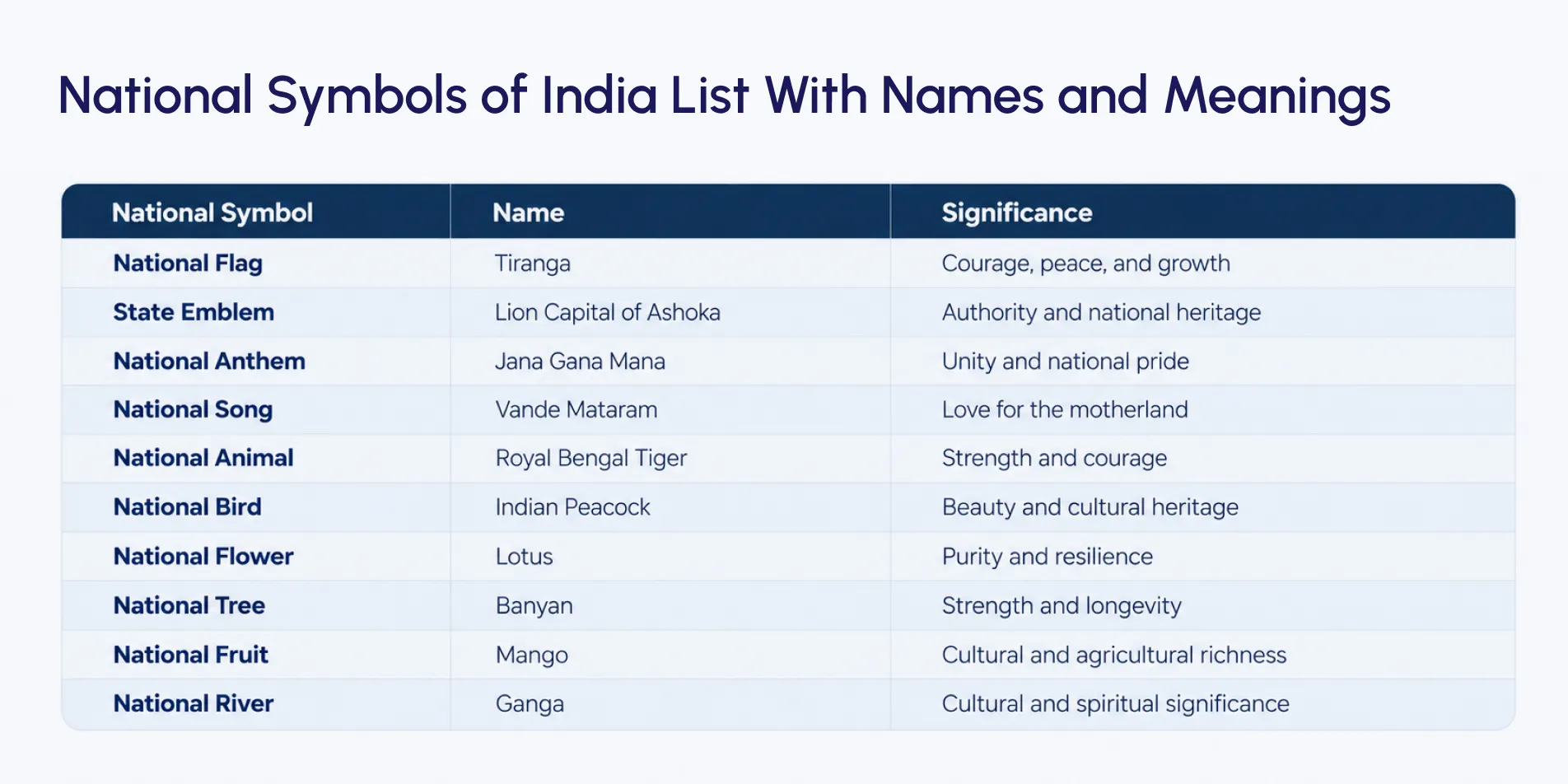
Important depictions of India’s history, natural beauty, and identity are included in the national symbols of India list. Every emblem represents a distinct facet of the nation’s customs, history, or culture.
National Symbol | Name | Significance |
National Flag | Tiranga | Courage, peace, and growth |
State Emblem | Lion Capital of Ashoka | Authority and national heritage |
National Anthem | Jana Gana Mana | Unity and national pride |
National Song | Vande Mataram | Love for the motherland |
National Animal | Royal Bengal Tiger | Strength and courage |
National Bird | Indian Peacock | Beauty and cultural heritage |
National Flower | Lotus | Purity and resilience |
National Tree | Banyan | Strength and longevity |
National Fruit | Mango | Cultural and agricultural richness |
National River | Ganga | Cultural and spiritual significance |
These symbols remind citizens of India’s diversity and shared values. Learning about them encourages awareness, respect, and appreciation of the nation’s identity. Celebrate India’s national pride by displaying Indian Desk Flags at your home, office, or workspace.
Five National Symbols Every Indian Should Know
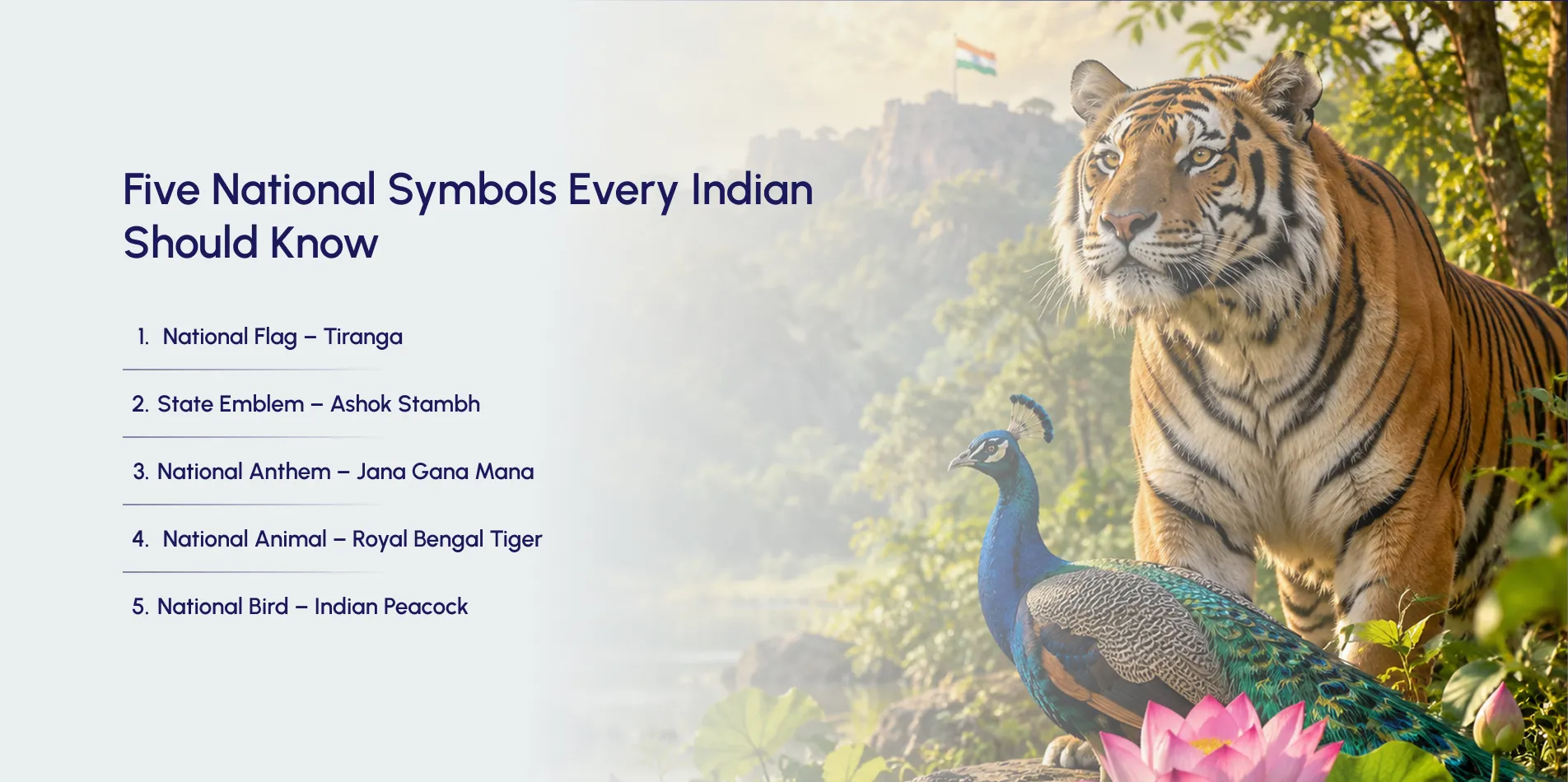
The following five national symbols are particularly significant among India’s significant national representations. They are a reflection of the nation’s cultural identity, power, togetherness, and history.
1. National Flag – Tiranga
The three horizontal colors of the Indian national flag are saffron, white, and green, with a navy-blue Ashoka Chakra in the middle.
Meaning of the Tricolour
Green stands for development and wealth, white for peace and honesty, and saffron for bravery and selflessness. With its twenty-four spokes, the Ashoka Chakra stands for morality and ongoing advancement.
2. State Emblem – Ashok Stambh
The Lion Capital of Ashoka at Sarnath served as the model for India’s state emblem. Three of the four lions in the original sculpture can be seen in the official two-dimensional symbol.
Historical Significance
India’s historical legacy and sovereignty are symbolized by the emblem. Its motto, “Satyameva Jayate,” which translates to “Truth Alone Triumphs,” highlights the significance of the truth.
3. National Anthem – Jana Gana Mana
Jana Gana Mana, written by Rabindranath Tagore, became the national anthem of India on January 24, 1950. It fosters respect for the nation and honors national unity.
4. National Animal – Royal Bengal Tiger
The Royal Bengal Tiger represents bravery, strength, and the diversity of India’s biodiversity. Additionally, protecting tigers promotes healthy forest ecosystems and biodiversity.
5. National Bird – Indian Peacock
The Indian Peacock, renowned for its vibrant feathers and elegant look, is a symbol of the beauty of nature. Additionally, it has cultural significance in Indian mythology, art, and customs.


What Is Indian National Emblem? History and Significance
There is always a question about what is Indian national emblem and why it symbolizes the nation. India’s State Emblem was adopted on January 26, 1950, and derived from the famous Lion Capital of Ashoka at Sarnath. Learn more about the history, symbolism, and cultural significance of India’s national emblem by exploring the Ashok stambh meaning.
Meaning of the Four Lions and Satyameva Jayate
Four lions are considered to be symbols of power, bravery, assurance, and pride. “Satyameva Jayate” is the national motto, which comes from the Mundaka Upanishad.
Where Is the National Emblem Used?
The emblem is displayed on passports, governmental documents, money, and even official seals. There are legal guidelines for using the emblem.
Pictures of Indian National Symbols With Names
Educational resources featuring pictures of Indian national symbols help students and readers recognize important national representations. Visual learning makes their names, appearances, and significance easier to understand and remember.
National Symbols Image Chart
An illustrated chart can feature the Tiranga, Ashok Stambh, tiger, peacock, lotus, and other symbols with short descriptions. Such charts are useful for classrooms, school projects, cultural exhibitions, and patriotic activities.
Interesting Facts About National Symbols of India
The national symbols of India have fascinating historical backgrounds. Some interesting facts include:
- The Indian national flag was adopted on July 22, 1947.
- The Ashoka Chakra contains 24 equally spaced spokes.
- The Indian Peacock was declared the national bird in 1963.
- The Royal Bengal Tiger became India’s national animal in 1973.
- India has no officially designated national sport, although hockey is often mistakenly considered one.
These facts help readers understand India’s heritage while correcting common misconceptions about its national identity.
Importance of National Symbols of India in Everyday Life
The national symbols of India invoke feelings of patriotism, unity, and respect for the nation. They also remind people of the freedom struggle, cultural background, and duties connected with one’s nationality.
Express your patriotism and celebrate Indian heritage by discovering how to honor India Through Meaningful Accessories.
Role in National Celebrations
On India’s Independence Day and Republic Day, national symbols assume much significance as an expression of patriotism. Various functions, including flag-hoisting ceremonies, are organized at schools, offices, and other places.
Celebrate Indian Heritage With DeshPrem
DeshPrem brings to life the patriotic feeling that Indians have for their country with its creatively crafted range of products that embody the spirit of nationality. The Indian flags for the desktop, Ashok Stambh models, and patriotic accessories enable individuals to showcase their love for their motherland.
Explore the DeshPrem patriotic collection to celebrate Indian heritage while showing proper respect for national symbols.
Conclusion
The national symbols of India reflect the country’s rich heritage, unity, and cultural identity. Every symbol carries a meaningful story connected to India’s history and values. Understanding their importance encourages patriotism and respect. Celebrate India’s remarkable spirit with DeshPrem and express your national pride.
FAQs
What Is Included in the National Symbols of India List?
The national symbols of India list includes the national flag, state emblem, anthem, song, animal, bird, tree, flower, fruit, and other recognized symbols.
What Are the Five National Symbols of India?
The five national symbols highlighted here are the national flag, state emblem, national anthem, Royal Bengal Tiger, and Indian peacock.
What is the Indian National Emblem, and why is it significant?
The National Emblem of India is taken from the Lion Capital of Ashoka at Sarnath. It symbolizes India’s sovereignty, legacy, and devotion to truth.