
No products in the cart.: ₹0.00

Lion Capital of India: History, Meaning & Significance

The lion capital of India is one of the most potent symbols of India’s history, culture, and national identity. The original sculpture was made in the reign of Emperor Ashoka at Sarnath in the Indian state of Uttar Pradesh, where Gautama Buddha is believed to have delivered his first sermon. Centuries later, an adapted version was used as the national emblem of India, linking ancient heritage with modern India.
History of the Lion Capital of India
The lion capital of India was created in the Mauryan period during the 3rd century BCE. Emperor Ashoka built stone pillars to propagate ideas of Dharma, ethical conduct, and good governance. The famous four-lion capital crowned the Sarnath pillar.
The original capital is of polished sandstone and has four lions standing back-to-back. Below them is an abacus with animal figures and Dharma Chakras, above a bell-shaped lotus base. Those interested in exploring this historic national symbol can also view different representations of the Ashok Stambh inspired by India’s rich heritage.
Historical Facts Five
- It was made during the reign of Emperor Ashoka.
- It was originally on a pillar at Sarnath.
- It is from the Mauryan period.
- It is made of polished sandstone.
- It is the inspiration for India’s official State Emblem.
Lion Capital of Ashoka Meaning
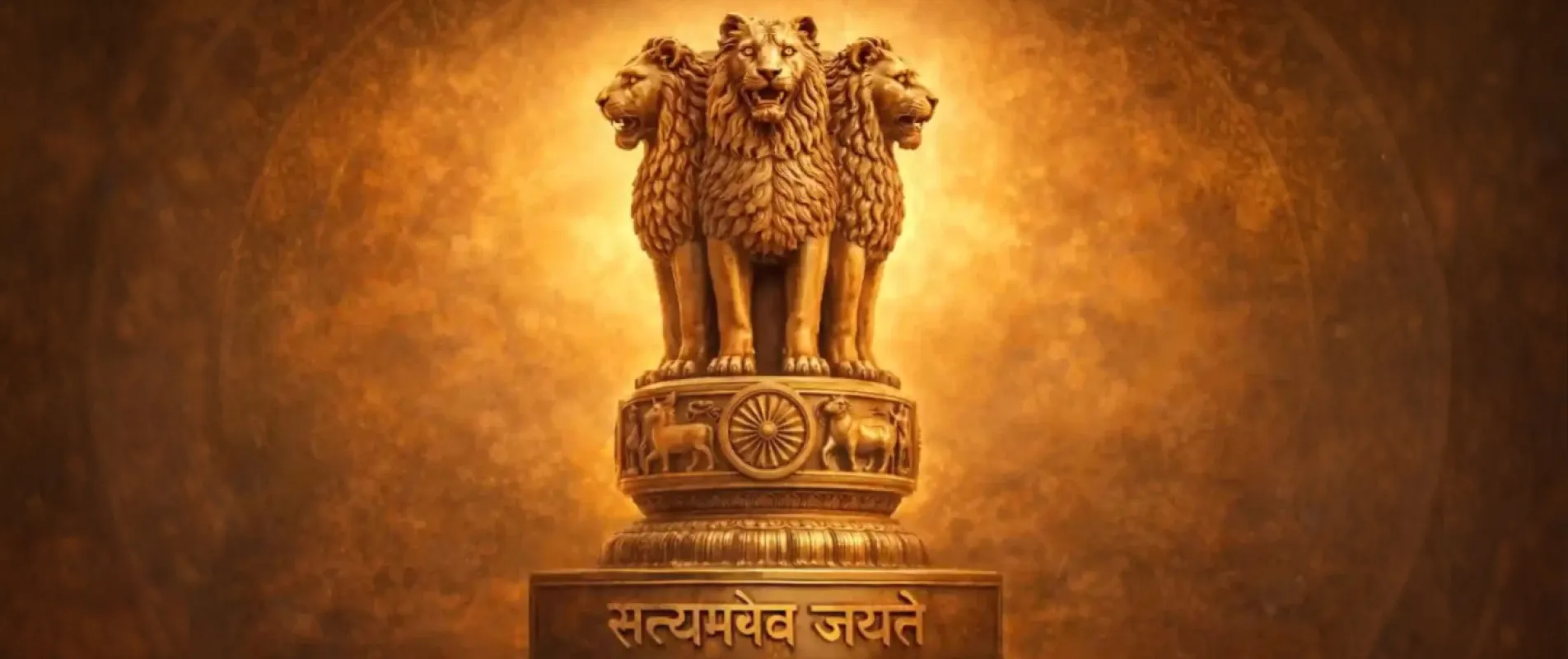
The lion capital of ashoka meaning “connected with courage, authority, confidence, and moral leadership.” The four lions face in four different directions and are often taken to symbolize strength and the spreading of the Dharma. The design suggests that authority should be regulated by justice and responsibility.
The full design conveys the lion capital meaning. The abacus has a horse, bull, elephant, and lion separated by wheels. Together these elements signify strength, movement, stability, and law.
Five Main Symbols and Their Ideas
- Four Lions: Strength, courage, and authority.
- Dharma Chakra: Law, duty, and progress.
- Horse: Energy and forward movement.
- Bull: Stability, patience, and strength.
- Lotus Base: Purity and artistic balance.
What the Main Elements Represent
The symbolism of the lion capital of India becomes easier to understand when its main elements are viewed together. Each part adds to the larger message of responsibility, Dharma, and progress.
Element | Symbolic Significance |
Four Lions | Courage, leadership, and authority |
Dharma Chakra | Justice, duty, and progress |
Horse | Energy and forward movement |
Bull | Stability and perseverance |
Lotus | Purity and spiritual growth |
The lion capital of ashoka meaning therefore goes beyond a royal symbol. It combines political strength with ethical values, making the sculpture a strong representation of responsible leadership.


How It Became the National Emblem
The lion capital of India was officially adopted as an adaptation after India became a republic on 26 January 1950. In the two-dimensional State Emblem, only three lions are visible, the fourth facing away. Below them is the Chakra of Dharma in the center, a horse on one side and a bull on the other.
Beneath the emblem is the Devanagari script for “Satyameva Jayate,” which means “Truth Alone Triumphs.” It underlines the design’s links to truth, justice, and public accountability. The India national emblem lion capital of ashoka. It links India’s ancient heritage with the constitutional values of the Modern Republic. The spirit of national pride is also reflected through accessories such as an Indian flag badge, which represents patriotism and respect for the nation.
Five Features of the Official Emblem
- Three lions are visible in the official design.
- The fourth lion is understood to be behind them.
- The Dharma Chakra appears in the center.
- A horse and bull appear on the abacus.
- “Satyameva Jayate” is written below the emblem.
Significance in Modern India
Today the lion capital of India is linked with the power of the Indian state. It appears on official documents, passports, currency, seals, and government buildings.
The national emblem of India is more than the authority of the government. It speaks of dignity and responsibility, of truth and justice. Its ancient origin also reminds citizens that modern India is built on a long cultural and philosophical tradition to draw strength from.
The relevance of the lion capital meaning is that the message is not confined to the Mauryan age. Courage with Dharma is responsible leadership. This endows the symbol with a continuing significance in a democratic society where public authority is expected to serve citizens fairly.
Cultural and Historical Importance
The sculpture connects ancient Mauryan history, Buddhist heritage, and modern Indian statehood. The India national emblem lion capital of ashoka therefore acts as a bridge between ancient history and modern statehood.
It is also an important example of the ancient Indian achievement in art by its smooth finish, animal carvings, and proportion. Today, heritage-inspired products such as Ashoka Stambh Pen Stands bring the symbolism of Ashoka’s legacy into modern everyday spaces.
Why It Still Matters
The significance of this very old symbol still lies in the fact that it combines elements of history, art, philosophy, and national identity. People are made aware of the fact that leadership must be based on truth, justice, and righteousness and not on power.
The national emblem of India is the symbol that depicts India both within the nation and in the rest of the world. The historic background makes India feel connected with its ancient civilization.
Conclusion
The lion capital of India goes beyond just being an old statue. It symbolizes bravery, Dharma, justice, truth, and the historical heritage of India. This symbol is significant from Emperor Ashoka’s Sarnath pillar till today, where it continues to symbolize the values of the republic nation.
FAQs
What is the Lion Capital of India?
This is the well-known four-lions monument of Sarnath dating back to the era of King Ashoka and now India’s State Emblem.
What does the Lion Capital of Ashoka mean?
It represents courage, authority, Dharma, moral leadership, and the idea of justice spreading in all directions.
Why is the Lion Capital important today?
It connects India’s ancient heritage with modern sovereignty, constitutional values, and national identity.